GPT-6 vs Claude Opus 5 vs Gemini 3: The 2026 Comparison
GPT-6 Astra, Claude Opus 5, and Gemini 3 compared for writing, coding, research, and cost in 2026, plus the easiest way to use all three.
GPT-6 vs Claude Opus 5 vs Gemini 3: The 2026 Comparison
All three major labs released new flagships in 2026. The "which is best" question comes up everywhere, but they're more similar than the marketing suggests. The right pick depends on your task. Here's how they compare, category by category.
The lineups, quickly
Before the head-to-head, here's where each family sits as of late 2026:
- OpenAI: GPT-6 Astra is the latest flagship. It sits above the GPT-5.6 family (Sol, Terra, and Luna). Many people still use GPT-5.5 in ChatGPT every day.
- Anthropic: Claude Opus 5 is the flagship most people reach for. Fable 5.1 (Mythos class) sits above it for max capability, and Sonnet 5 is the balanced default for daily use.
- Google: Gemini 3 covers both Gemini 3.1 Pro and the faster Gemini 3.8 Flash. Both tie into Google Search and Workspace.
Names aside, what matters is how they perform on the work you do. Let's go category by category.
Writing
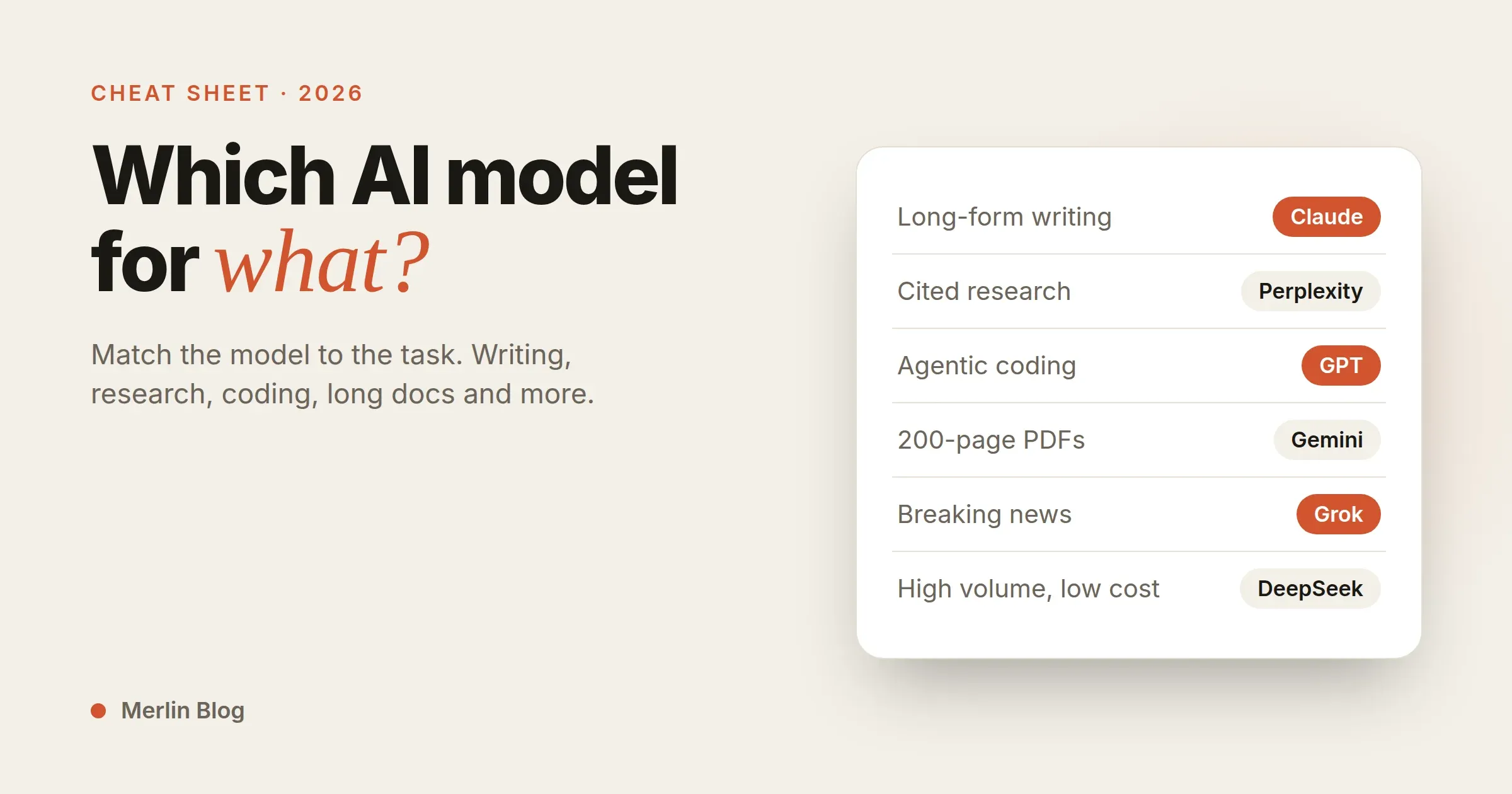
Claude takes the lead for most people. Opus 5 writes text that usually needs little cleanup and keeps a steady human tone even in long pieces. If you're writing for people, start here.
GPT-6 is a close second and works well if you prefer to draft and edit in one place, not regenerate everything. Gemini is capable, but often reads more generic and usually needs a firmer prompt for style.
Coding
Coding is a rough tie between GPT and Claude, depending on the job. GPT-5.6 excels at long, multi-step agentic coding. Claude is a favorite for complex engineering and powers many popular dev tools behind the scenes. Gemini is solid, especially if your workflow already runs on Google.
Research and current events
Gemini leads for grounded, checkable answers because of Google Search integration and its large context window. For live current events, though, none of these three beats a live-data model like Grok, which reads X directly and reacts fast. Perplexity is strong for citation-first research when you want to check every source.
Long documents
Gemini leads for long documents. Gemini 3 handles huge context, making it the pick for a 200-page report or dense contract. The other two can do it, but Gemini holds detail better on very long inputs.
Multimodal work
Gemini also leads for multimodal work. It handles text, images, audio, and video, with Google Search grounding as a bonus. GPT-6 and Claude can handle images with text, but if you mix media often, Gemini is home base.
Cost
Gemini's Pro tier is usually the cheapest strong option. Claude's Sonnet tier gives you most of Opus-level quality for less money. GPT-6 Astra is powerful but costs more, so it's overkill for routine work. For high-volume jobs, value tiers matter more than flagships, since every extra cent adds up.
So which one should you actually buy?
If you pick only one, you accept a weakness. Choose Claude and you lose Gemini's long-context research. Pick GPT and miss Claude's writing polish. Pick Gemini and you lose what the other two do best. Any "pick one" approach means giving something up.
Most heavy users don't want to make that trade. The real answer in 2026 is access to all of them, not just one.
This is where Merlin fits. Instead of tying your workflow to one lab, Merlin gives you GPT, Claude, Gemini, DeepSeek, and Grok in one account and one window. Send writing to Claude, long docs to Gemini, general work to GPT, live questions to Grok. Switch with a click. When a new flagship launches, it appears in the same place. You get all the strengths, none of the weaknesses.
How to test them yourself
Benchmarks and comparison posts are a starting point, but the best model fits your work. Test it yourself: pick three real tasks you do often, one writing, one research, one long doc or coding. Run each through all three models with the same prompt. Judge the results: did it read well, get facts right, or need heavy editing?
You'll usually find your own preferences match the categories above. If all three models live in one tool, this test takes ten minutes, not three separate signups. That's why keeping them together is practical, you can check, not just guess.
Which should a team standardize on?
Teams like simple answers, so they often want to pick just one model. But standardizing on a single model means everyone shares the same weakness. The engineer wants Claude or GPT. The researcher wants Gemini or a search-native model. The marketer wants Claude for voice. Force everyone onto one, and someone is always using the wrong tool.
A better way for teams is to standardize on access, not a single model. Give everyone a tool with all the major models and let each person pick the best for their work. You get one subscription, one bill, and no one has to compromise.
A quick decision guide
If you only remember one thing, remember this in words:
- Want the best writing? Use Claude Opus 5.
- Want strong all-round coding? GPT-5.6 or Claude, depending on the job.
- Want the best long-document research? Gemini 3 is the pick.
- Want the best value for heavy use? Gemini Pro or Claude Sonnet are your best bets.
- Want the best for current events? Use a live-data model like Grok, not these three.
No single name appears on every line. That's the point.
What the version numbers don't tell you
Version numbers get confusing, but in daily use, these models are closer than the specs suggest. For most everyday tasks, any of the three will do fine. The real differences show up at the edges: long reports where context length matters, writing that needs to sound just right, or coding tasks that run for many steps. That's when picking the strongest model pays off, and having all three matters.
Don't stress over which flagship is "best", there's no single answer, and it changes anyway. Worry less, switch more.
The pace of change is the real story
The real story in 2026 isn't that one model won, it's how fast the lead kept changing. Each of these three shipped a major release this year and each briefly held the top spot. That churn is good for users, since competition pushes quality up and prices down. But if your whole workflow is tied to one provider, you're always a release behind, wishing you'd picked differently.
You can enjoy the churn instead of suffering through it by not betting on just one. With access to all, each new release is an upgrade you get automatically. The latest leader is in your dropdown. Try it, use it, move on. No migration, no regrets, no new bills.
A realistic recommendation
If I had to give one practical answer, it's this: don't pick just one. Use a tool that gives you all three, plus a live-data model for current events and a value model for heavy use. Use Claude when words matter, Gemini for huge documents, GPT for general work and coding, and others for their specialties. That setup wins over any single flagship, and it keeps winning as things change. The comparison above is a snapshot. Access to all is the real strategy.
Common questions
Which is the best AI model overall in 2026? There's no single winner. Each model leads in its own area. Claude is best for writing, Gemini for long context and multimodal, GPT for balance and agentic coding. The right choice depends on your task.
Is GPT-6 worth paying more for than GPT-5.6? For tough reasoning and frontier work, maybe. For everyday work, GPT-5.6 or a competitor's value model usually does the job for less.
Can I use GPT, Claude, and Gemini together without three subscriptions? Yes. A multi-model tool like Merlin gives you all three under one plan, so you can compare and send each task to the best model.
How often does the ranking change? A lot. New versions shipped all through 2026 and kept trading the lead. That churn is the best reason to keep access to several models, not just one.
Which model is cheapest? For value, Gemini's Pro tier and Claude's Sonnet tier are usually the best for the price, and open-weight models like DeepSeek go even lower for high-volume jobs.
Should I wait for the next model before choosing? No. There's always a new model coming. Pick a setup that gives you every new release automatically, so you never have to worry about timing.
Do these models differ for casual use? For everyday questions and simple writing, they're all similar and any will work. The differences show up on hard tasks: long documents, polished writing, or multi-step coding.
Bottom line
Pick a model for each task, not for life. Send writing to Claude, long documents to Gemini, general work and agentic coding to GPT, live questions to a real-time model. The easiest way to work like this is to keep all of them a shortcut away.
Model details reflect the landscape as of September 2026 and change often. Check each provider's current docs for the latest.
Experience the full potential of ChatGPT with Merlin

Udita Pal
Growth @merlin